
How Buckling Up Can Save Your Life and Your Injury Claim

I'm Gil Hacohen, a Phoenix attorney and founder of Lawyers For Less. When someone is injured or facing a legal problem they did not choose, they may find themselves dealing with serious consequences, mounting expenses, lost income, and an insurance company or opposing party determined to minimize its responsibility. I believe people deserve an attorney who will take the time to understand their situation, investigate what actually happened, and challenge the other side's version of events when the evidence tells a different story. My job is to protect my clients' interests, hold responsible parties accountable, and pursue the outcome they deserve.
How Arizona Seatbelt Laws Impact Your Injury Claim
Wearing a seatbelt is crucial for safety and legal protection in Arizona. It not only saves lives but also affects your ability to claim compensation after an accident. Lawyers For Less can guide you through understanding these laws and their implications on your injury claim.
- Primary enforcement of seatbelt laws ensures compliance.
- Child safety restraints are mandatory for young passengers.
- Seatbelt non-use can reduce compensation under comparative negligence.
- Legal guidance can help maximize your claim.
What Are the Key Seatbelt Laws in Arizona?
Arizona mandates seatbelt use for all vehicle occupants in cars manufactured after 1968. Under A.R.S. § 28-909, drivers can be cited for their own seatbelt violations as well as for passengers under 16 not wearing one. Compliance is crucial both for safety and legal reasons.
Primary Enforcement Explained
Unlike some states, Arizona allows law enforcement to stop and ticket drivers solely for seatbelt violations. This primary enforcement ensures high compliance rates, which contributes to road safety.
Fines and Penalties
While the fine for not wearing a seatbelt is relatively low, typically around $10, the consequences in a legal context can be significant, impacting your potential compensation in an injury claim.
Vehicle Exceptions
Certain vehicles, such as buses and older models, may be exempt from these requirements. However, it's advisable to always wear a seatbelt when available for maximum safety.
How Do Arizona's Child Safety Seat Laws Work?
Child safety in vehicles is stringently regulated in Arizona. Children under 8 years old and shorter than 4'9" must be restrained in a child safety seat, as per A.R.S. § 28-907. This law is strictly enforced to protect young passengers.
Types of Child Restraints
Depending on the child's age, weight, and height, different types of car seats are required, ranging from rear-facing infant seats to booster seats for older children. Ensuring the correct seat is used is vital for both safety and legal compliance.
Penalties for Non-Compliance
Failure to use appropriate child restraints can result in fines and increased liability in the event of an accident. Law enforcement can stop vehicles solely for this infraction.
Impact on Injury Claims
If a child is injured in an accident and was not properly restrained, it could complicate injury claims. Proper documentation and adherence to safety laws are essential.
Can Airbags Replace Seatbelts?
No, airbags are designed to complement seatbelts, not replace them. They provide additional protection but are significantly less effective without seatbelt usage.
The Role of Airbags
Airbags deploy in severe crashes to cushion impact but cannot prevent ejection from the vehicle, which seatbelts do effectively.
Studies on Combined Safety Systems
Research consistently shows that the combination of seatbelts and airbags reduces the risk of fatal injury by up to 60% compared to airbags alone.
Legal Implications
In legal terms, not wearing a seatbelt even with airbags present can still negatively affect injury claims under Arizona's comparative negligence laws.
How to Wear a Seatbelt Correctly?
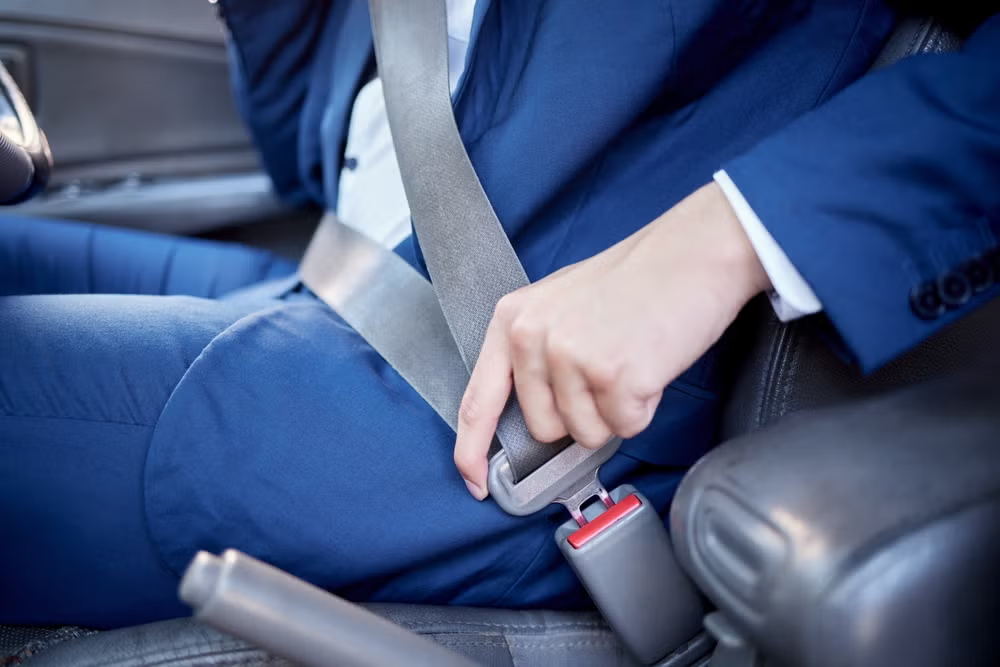
Proper seatbelt use is critical for safety and legal defense. The lap belt should be snug across the hips, and the shoulder belt should cross the chest without touching the neck.
Common Mistakes
Avoid placing the shoulder belt behind your back or under your arm, as this can lead to serious injury and weaken legal claims in the event of an accident.
Importance in Legal Cases
Correct use of seatbelts can be pivotal in legal cases, as incorrect usage might be cited as contributory negligence.
Educational Programs
Arizona offers various programs to educate the public on the proper use of seatbelts, significantly reducing misuse and enhancing road safety.
Can Not Wearing a Seatbelt Affect Your Compensation?
Yes, under Arizona's comparative negligence rule, your compensation can be reduced if you were not wearing a seatbelt at the time of an accident, as per A.R.S. § 12-2505.
Understanding Comparative Negligence
This rule means that if you're partially at fault for your injuries, your compensation is reduced by your percentage of fault. If not wearing a seatbelt contributed to your injuries, it can significantly reduce your claim.
Case Example
Consider a scenario where another driver is primarily at fault for an accident, but your injuries were exacerbated by not wearing a seatbelt. Your compensation could be reduced by the percentage attributed to your fault.
Legal Defense Strategies
An experienced attorney can help counter claims of negligence due to seatbelt non-use by demonstrating other factors that contributed more significantly to your injuries.
How Can Lawyers For Less Help After a Car Accident?
At Lawyers For Less, we specialize in protecting the rights of those injured in car accidents across Arizona. Our team thoroughly investigates all aspects of your case to ensure maximum compensation.
Comprehensive Case Evaluation
We assess all factors contributing to the accident, including driver negligence and seatbelt use, to build a strong case on your behalf.
Insurance Negotiations
Our attorneys are adept at negotiating with insurance companies to ensure you receive fair compensation for your injuries, lost wages, and suffering.
Personalized Legal Strategies
Every case is unique, and we tailor our legal strategies to fit the specifics of your situation, leveraging our deep knowledge of Arizona's legal landscape.
Why Is Legal Representation Important for Seatbelt-Related Claims?
Legal representation ensures you have a knowledgeable advocate to navigate complexities arising from seatbelt-related claims, especially concerning comparative negligence.
Counteracting Insurance Tactics
Insurance companies often seek to minimize payouts by attributing fault to seatbelt non-use. A lawyer can effectively counter these tactics.
Maximizing Compensation
An attorney understands how to document and argue your case to maximize compensation, considering all applicable Arizona laws.
Peace of Mind
Knowing you have professional legal support allows you to focus on recovery while your attorney handles the legal challenges.
What Are the Steps to Take After a Car Accident in Arizona?
Taking the right steps after a car accident is crucial for health and legal reasons. Here's a step-by-step guide:
- Ensure safety: Move to a safe location if possible, and check for injuries.
- Contact authorities: Call the police to report the accident and obtain an official report.
- Document the scene: Take photos and gather contact information from witnesses.
- Seek medical attention: Even if injuries seem minor, get a medical evaluation promptly.
- Notify your insurance: Inform your insurer about the accident, providing all necessary details.
- Consult a lawyer: Contact a personal injury lawyer to discuss your case and understand your legal options.
Checklist for Filing a Seatbelt-Related Injury Claim
Gathering the necessary documentation and information is vital for filing a successful injury claim. Use this checklist to ensure you have everything needed:
- Accident report from law enforcement
- Medical reports and bills
- Photos of the accident scene and injuries
- Witness statements and contact information
- Insurance communications
- Evidence of seatbelt use or non-use
- Documentation of lost income
- Legal correspondence and filings
- Repair estimates for vehicle damage
- Any relevant Arizona statutes applicable to your case
Table: Contested vs. Uncontested Injury Claims in Arizona
| Aspect | Contested Claim | Uncontested Claim |
|---|---|---|
| Resolution Time | Longer, often involving court proceedings | Shorter, may settle out of court |
| Legal Costs | Higher due to extended legal work | Lower as less legal intervention is needed |
| Stress Level | Higher due to ongoing disputes | Lower, typically more amicable |
| Potential Compensation | Potentially higher with successful litigation | Generally lower but quicker to receive |
Key Takeaways
- Arizona requires seatbelt use for all vehicle occupants, impacting safety and legal claims.
- Child restraint laws are strictly enforced to protect young passengers.
- Not wearing a seatbelt can reduce compensation under comparative negligence laws.
- Legal representation can significantly enhance your claim's success.
- Understanding and complying with Arizona's seatbelt laws is crucial for protecting your rights and well-being.
The Role of Seatbelt Use in Arizona Car Accident Claims
Understanding Legal Presumptions
In Arizona, the use of a seatbelt can significantly influence the outcome of car accident claims. The legal system often presumes that using a seatbelt is a standard duty of care for all drivers and passengers. This presumption can impact how fault and damages are assessed. According to A.R.S. § 28-909, failure to wear a seatbelt can be used as evidence of negligence, which might affect the compensation you receive.
Strategies for Legal Defense
When involved in a car accident, not wearing a seatbelt can complicate your legal defense. However, an experienced attorney can challenge these presumptions by presenting other factors that contributed to the accident or exacerbated injuries. For instance, if the other driver was under the influence of alcohol, this could mitigate the impact of your seatbelt non-use on your claim. Lawyers can also argue that the injuries would have occurred regardless of seatbelt use.
Case Example in Arizona
Consider a scenario where a driver in Phoenix is rear-ended at a stoplight. The driver was not wearing a seatbelt and sustained serious injuries. Despite this, evidence showed the other driver was speeding and distracted. In this case, the non-use of a seatbelt was considered in the compensation decision, but the primary fault lay with the speeding driver, leading to a reduced but still substantial settlement for the injured party.
Comparative Negligence and Its Impact on Compensation
Detailed Overview of Comparative Negligence
Arizona operates under a comparative negligence system, meaning your ability to recover damages is affected by your degree of fault. As outlined in A.R.S. § 12-2505, compensation is adjusted based on the percentage of fault attributed to each party. For example, if you are found to be 20% at fault for not wearing a seatbelt, your compensation is reduced by that percentage.
Illustrating Fault Distribution
Fault distribution is crucial in the application of comparative negligence. Suppose you were in an accident where the other driver was 80% at fault for running a red light, but you weren't wearing a seatbelt. If your medical expenses totaled $50,000, and you were deemed 20% at fault, you would receive $40,000 after the reduction.
Practical Example with Table
Here's a table illustrating how comparative negligence affects compensation:
| Scenario | Total Damages | Your Fault Percentage | Compensation Received |
|---|---|---|---|
| Accident with seatbelt use | $50,000 | 0% | $50,000 |
| Accident without seatbelt use | $50,000 | 20% | $40,000 |
How Seatbelt Use Influences Jury Perception
Impact on Jury Decisions
Juries in Arizona often view seatbelt use as a reflection of individual responsibility. Not wearing a seatbelt can negatively influence a jury's perception of a plaintiff, potentially affecting the outcome of a trial. Jurors might see non-compliance as contributory negligence, which can sway their decision regarding fault and damages.
Mitigating Negative Perceptions
Legal representation can play a pivotal role in mitigating negative perceptions. Attorneys can present evidence such as witness testimonies or expert opinions to demonstrate that failing to wear a seatbelt was not the primary cause of the injuries or to emphasize the culpability of the other driver. This strategic approach can help preserve the plaintiff's credibility in the eyes of the jury.
Real-Life Courtroom Scenario
Consider a case in Tucson where a motorist, despite not wearing a seatbelt, was awarded significant damages due to compelling evidence that the other driver was texting and driving. The attorney successfully highlighted the severity of the other driver's negligence, convincing the jury that the seatbelt non-use was a minor factor in the overall context of the accident.
Steps to Take After a Car Accident Without a Seatbelt
Immediate Actions
- Check for injuries and seek medical attention. Document any injuries related to the accident, as this will be critical in your claim.
- Contact law enforcement to file an official accident report. Accurate documentation will be vital when dealing with insurance companies and legal proceedings.
- Gather evidence at the scene, including photographs, witness statements, and the other driver's contact information and insurance details.
Legal Steps
After addressing immediate concerns, it's crucial to consult with a personal injury attorney experienced in Arizona's laws. They will help navigate the complexities of your case, especially concerning seatbelt use and its implications on fault and compensation. An attorney will also deal with insurance adjusters, ensuring you don't settle for less than what you deserve.
Example of Effective Post-Accident Strategy
Imagine a driver in Flagstaff involved in a collision without wearing a seatbelt. The driver follows the recommended steps, promptly contacting an attorney who successfully negotiates with the insurance company. The evidence gathered at the scene combined with medical records supports a fair settlement, demonstrating the importance of acting swiftly and strategically after an accident.
The Psychological and Social Factors of Seatbelt Use
Understanding Behavioral Patterns
Various psychological factors influence why individuals may choose not to wear seatbelts. Some individuals might underestimate the risk of an accident, while others might find seatbelts uncomfortable. Understanding these behaviors can inform public safety campaigns aimed at increasing seatbelt usage across Arizona.
Social Influences on Compliance
Social norms and peer behavior significantly affect seatbelt use. Campaigns that promote seatbelt use as socially responsible behavior can be effective. In Arizona, programs targeting younger drivers through social media and school initiatives have successfully increased compliance rates, emphasizing the role of community influence.
Arizona-Specific Initiatives
The Arizona Department of Transportation (ADOT) sponsors various initiatives to promote seatbelt use. These include educational programs in schools and partnerships with local businesses to incentivize seatbelt compliance. For example, a campaign in Tempe offered discounts at local stores for drivers spotted wearing seatbelts, effectively boosting community engagement and compliance.
The Science Behind Seatbelt Effectiveness
Understanding Crash Dynamics
Seatbelts are engineered to work in conjunction with the laws of physics to protect vehicle occupants. During a crash, occupants experience rapid deceleration, and without a seatbelt, they continue moving at the vehicle's pre-collision speed until they hit an interior surface or are ejected. A seatbelt restrains the body at the strongest parts, namely the pelvis and ribcage, distributing the force over a wider area and significantly reducing the risk of injury. In Arizona, the effectiveness of seatbelts is underscored through various safety campaigns aimed at educating drivers about these dynamics.
Statistical Evidence of Safety
Statistics from the National Highway Traffic Safety Administration (NHTSA) reveal that seatbelts reduce the risk of fatal injury to front-seat passenger car occupants by 45%, and the risk of moderate to critical injury by 50%. These statistics highlight the importance of compliance with Arizona's seatbelt laws under A.R.S. § 28-909. For instance, a study specific to Arizona found that areas with higher seatbelt usage rates had a corresponding decrease in traffic fatalities, reinforcing the life-saving potential of proper seatbelt use.
Preventing Ejections
One of the most dangerous outcomes of not wearing a seatbelt is ejection from the vehicle. Seatbelts are crucial in preventing this, as they keep occupants secured inside the vehicle’s protective frame. In Arizona-specific scenarios, accidents on high-speed highways like I-10 can be particularly deadly if occupants are ejected. Understanding the correlation between seatbelt usage and the prevention of ejection is an essential aspect of road safety education in the state.
Legal Consequences of Not Wearing a Seatbelt in Arizona
Impact on Legal Liability
In Arizona, failing to wear a seatbelt does not only impact personal safety but also legal liability. Under Arizona Revised Statutes § 12-2505, the concept of comparative negligence is applied. This means if a person is injured in an accident and was not wearing a seatbelt, their compensation might be reduced in proportion to their responsibility for their injuries. For example, if a court determines that not wearing a seatbelt contributed 20% to the injuries sustained, the potential compensation could be reduced by that amount.
Insurance Claim Challenges
Insurance companies in Arizona can leverage the non-use of seatbelts as a strategy to diminish claims. They may argue that the injuries would have been less severe had the seatbelt been used, thereby reducing the payout. An Arizona case study demonstrates how insurance companies successfully reduced settlement amounts by proving that the claimant failed to wear a seatbelt, emphasizing the need for legal representation to navigate these challenges.
Defense Against Seatbelt Defense
An experienced attorney can help mitigate the seatbelt defense in Arizona by presenting evidence that other factors significantly contributed to the injuries. They might demonstrate that another party's actions were the primary cause of the accident or that the injuries would have occurred regardless of seatbelt use. This legal strategy is vital in ensuring that the rights of injured parties are protected, even when seatbelt usage is questioned.
Comparing Vehicle Safety Features: Seatbelts vs. Other Systems
Overview of Vehicle Safety Features
While seatbelts are a primary safety feature, modern vehicles come equipped with numerous other systems designed to protect occupants. These include airbags, anti-lock braking systems (ABS), electronic stability control (ESC), and advanced driver-assistance systems (ADAS). Each plays a role in enhancing safety, but none can replace the fundamental protection offered by seatbelts.
Effectiveness Comparison Table
| Safety Feature | Primary Function | Effectiveness |
|---|---|---|
| Seatbelts | Restrains occupants during a collision | Reduces fatal injury risk by 45% |
| Airbags | Cushions impact during a crash | Most effective in combination with seatbelts |
| ABS | Prevents wheel lockup during braking | Improves control, especially on slippery surfaces |
| ESC | Maintains vehicle control in all conditions | Reduces risk of rollovers and skidding |
Scenario: Choosing Safety Features for Arizona Roads
Consider a family purchasing a vehicle in Arizona. They prioritize safety due to frequent highway travel. While airbags and ESC are critical, they understand that without seatbelts, these features cannot provide full protection. The family opts for a model with comprehensive safety features but emphasizes the need for all members to always wear seatbelts, illustrating an informed approach to maximizing safety on Arizona roads.
Steps to Enhance Seatbelt Safety in Arizona
Implementing Best Practices for Seatbelt Use
To ensure maximum safety and legal compliance, adopting best practices for seatbelt use is essential. Here is a step-by-step guide for Arizona drivers:
- Ensure Proper Fit: Adjust the seatbelt to fit snugly across the hips and chest. Avoid placing the shoulder belt behind your back or under your arm.
- Educate Passengers: Make it a rule for all passengers to buckle up before the vehicle moves. Children should be appropriately restrained in suitable car seats as per A.R.S. § 28-907.
- Regular Checks: Routinely inspect seatbelts for signs of wear and tear, such as fraying or malfunctioning buckles.
- Participate in Safety Campaigns: Engage with local safety initiatives that promote seatbelt use, contributing to a culture of safety in Arizona.
- Stay Informed: Keep abreast of updates or changes to Arizona seatbelt laws to ensure ongoing compliance and safety.
Effective Communication with Law Enforcement
Understanding how to interact with law enforcement during traffic stops can enhance safety compliance. Drivers should remain calm and cooperative, providing documentation promptly and demonstrating awareness of seatbelt laws. If cited for a seatbelt violation, understanding the options for contesting the ticket or paying the fine is crucial, ensuring that any legal repercussions are appropriately managed.
Leveraging Technology for Safety
Modern technology offers innovative solutions to enhance seatbelt safety. Applications and in-car notifications remind drivers and passengers to buckle up. Embracing these technologies can significantly increase compliance and safety, particularly for young drivers who may benefit from additional reminders. Utilizing technology in this manner supports Arizona's commitment to reducing traffic-related injuries and fatalities.
FAQs About Arizona Seatbelt Laws and Injury Claims

Gil Hacohen, Esq.
Founder and Principal Attorney, Lawyers For Less, PLLC
State Bar of Arizona No. 031934
Licensed in Arizona since 2015
About Our Phoenix Attorney, Gil Hacohen
Gil Hacohen is the founder and principal attorney of Lawyers For Less, PLLC, a Phoenix-based law firm representing individuals and families throughout Arizona. Licensed to practice law in Arizona since 2015, Gil handles personal injury claims involving commercial trucks, delivery vehicles, and other motor vehicle collisions, including cases involving disputed liability, significant injuries, and complex insurance claims, as well as criminal defense, family law, estate planning and business formation matters. He combines hands-on legal representation with a commitment to making quality legal services accessible to everyday people.
Why I do this work
I founded Lawyers For Less in 2015 because I believed that access to quality legal representation should not depend on someone's financial resources. I wanted to build a practice where clients could receive experienced, personalized representation without feeling lost in the legal system.
That philosophy is especially important when the other side has more resources. When someone is seriously injured, charged with a crime, or going through a divorce, they may suddenly find themselves facing an insurance carrier, a prosecutor, or a legal process they don't understand. I believe my clients deserve an attorney who listens to their concerns, carefully examines the evidence, and isn't afraid to challenge the other side's conclusions.
Quick Inquiry
Get a free consultation today
Quick Inquiry
Get a free consultation today
Related Articles
How to File a Fire Damage Injury Claim in Arizona
October 24, 2026
Understanding the Arizona Personal Injury Mediation Process
October 23, 2026
Why Hire an Accident Reconstruction Expert in Arizona?
October 22, 2026
How to Appeal a Personal Injury Claim Denial in Arizona
October 21, 2026
Understanding Arizona Comparative Fault in Bicycle Accidents
October 20, 2026
Understanding Airbnb Injury Claims in Arizona
October 19, 2026
Need help with personal injury?
Learn About Our Personal Injury Services →Related Services