
Types of Personal Injury Claims in Arizona | Lawyers For Less

I'm Gil Hacohen, a Phoenix attorney and founder of Lawyers For Less. When someone is injured or facing a legal problem they did not choose, they may find themselves dealing with serious consequences, mounting expenses, lost income, and an insurance company or opposing party determined to minimize its responsibility. I believe people deserve an attorney who will take the time to understand their situation, investigate what actually happened, and challenge the other side's version of events when the evidence tells a different story. My job is to protect my clients' interests, hold responsible parties accountable, and pursue the outcome they deserve.
Comprehensive Guide to Personal Injury Claims in Arizona
Understanding the types of personal injury claims available in Arizona is crucial for those seeking compensation for injuries. From car accidents to medical malpractice, each claim type has its own legal nuances. Lawyers For Less, based in Arizona, offers affordable legal services to guide you through these processes.
- Key Takeaways:
- Various personal injury claims exist, each with unique legal requirements.
- Timely action is critical due to Arizona's statute of limitations.
- Compensation can cover medical expenses, lost wages, and more.
- Legal representation can significantly impact claim outcomes.
- Understanding Arizona-specific laws is essential.
What Are the Common Types of Personal Injury Claims in Arizona?
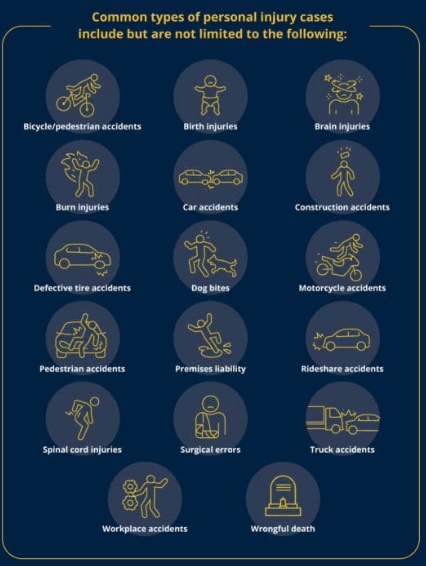
Personal injury claims in Arizona can arise from various incidents. The most common include car accidents, slip and falls, medical malpractice, wrongful death, workplace injuries, dog bites, and product liability cases. Each type requires understanding specific legal principles.
Car accidents often lead to personal injury claims due to Arizona's busy urban areas like Phoenix and Tucson. Slip and fall claims are prevalent in places where property owners fail to maintain safe conditions. Medical malpractice involves healthcare providers failing to meet standard care levels. Wrongful death claims are filed by families of deceased victims due to negligence. Workplace injuries might involve workers' compensation or third-party liability claims. Arizona follows strict liability rules for dog bites, holding owners accountable regardless of prior behavior. Product liability claims occur when defective products cause harm.
How Does the Statute of Limitations Affect Personal Injury Claims?
Understanding Arizona's Statute of Limitations
The statute of limitations in Arizona typically allows two years from the date of the injury to file a personal injury claim. This deadline is crucial as missing it can bar you from seeking compensation. Under A.R.S. § 12-542, this rule applies to most personal injury cases, but exceptions exist.
For example, if the injury is discovered later, the clock may start at the discovery date. In cases involving minors, the statute may be extended until they reach adulthood. Consulting with an attorney ensures you're aware of these timelines and exceptions.
What Should You Know About Car Accident Claims in Arizona?
Filing a Claim After a Car Accident
Car accident claims in Arizona are common due to high traffic volumes. Victims can seek compensation for damages, including medical expenses and lost wages. Arizona operates under a fault-based system, meaning the at-fault driver is responsible for damages.
To successfully file a claim, gather evidence such as police reports, witness statements, and medical records. Arizona's comparative negligence rule (A.R.S. § 12-2505) allows recovery even if you're partially at fault, though your compensation may be reduced proportionally.
How Do Slip and Fall Claims Work in Arizona?
Proving Negligence in Slip and Fall Cases
Slip and fall claims require proving the property owner's negligence. You must show that the owner knew or should have known about the hazard and failed to address it. This might involve gathering evidence like maintenance logs or eyewitness testimony.
According to A.R.S. § 33-1361, property owners must ensure safe premises. If negligence is proven, victims may recover damages for medical bills, lost earnings, and pain and suffering.
What Constitutes Medical Malpractice in Arizona?
Essential Elements of a Medical Malpractice Claim
Medical malpractice occurs when healthcare providers deviate from accepted standards, causing harm. This complex area requires expert testimony to establish negligence. Key elements include a doctor-patient relationship, breach of duty, causation, and damages.
Under A.R.S. § 12-563, plaintiffs must prove these elements to succeed. Cases often involve misdiagnosis, surgical errors, or improper treatment. Having thorough documentation and expert witnesses is critical.
How Are Wrongful Death Claims Handled in Arizona?
Filing a Wrongful Death Lawsuit
Wrongful death claims arise when a person's death results from another's negligence. In Arizona, these claims aim to compensate the deceased's family for their loss, covering funeral expenses, lost income, and companionship loss.
According to A.R.S. § 12-611, eligible parties include surviving spouses, children, and parents. The statute of limitations is generally two years from the death date, making timely action essential.
What Are the Legalities of Workplace Injury Claims?
Workers' Compensation vs. Personal Injury Claims
Workplace injuries usually fall under workers' compensation, which provides benefits regardless of fault. However, if a third party's negligence contributed to the injury, a personal injury claim might be possible.
For instance, if equipment failure caused an injury, the manufacturer might be liable. Navigating these claims requires understanding both workers' compensation laws and personal injury statutes.
How Does Arizona's Dog Bite Law Operate?
Strict Liability for Dog Owners
Arizona enforces strict liability for dog bites, meaning owners are liable for injuries caused by their pets, regardless of prior behavior. Victims can seek compensation for medical costs and emotional distress.
Under A.R.S. § 11-1025, no need exists to prove the owner knew of the dog's aggression. Documenting the incident and seeking medical attention promptly is vital.
What Is Product Liability and How Does It Apply in Arizona?
Understanding Product Liability Claims
Product liability holds manufacturers or sellers responsible for defective products causing injury. In Arizona, claims can be based on design defects, manufacturing errors, or inadequate warnings.
These cases require proving the product was defective and directly caused harm. Evidence might include product samples, purchase receipts, and expert analysis. Arizona courts apply strict liability, focusing on the product's condition rather than the manufacturer's conduct.
How Can Lawyers For Less Help with Your Personal Injury Claim?
Lawyers For Less PLLC provides comprehensive legal support for personal injury claims across Arizona. Our experienced attorneys offer client-focused services to maximize compensation. We handle all claim types, ensuring you understand your rights and options.
Contact us at (602) 800-5762 or visit our contact page for a consultation. Our affordable rates and dedicated approach make us the right choice for navigating Arizona's legal landscape.
| Claim Type | Common Causes | Potential Compensation |
|---|---|---|
| Car Accidents | Driver negligence, road conditions | Medical expenses, lost wages |
| Slip and Fall | Unsafe premises | Medical bills, pain and suffering |
| Medical Malpractice | Standard of care deviation | Medical costs, emotional distress |
| Dog Bites | Owner negligence | Medical treatment, emotional distress |
- Seek immediate medical attention.
- Document the incident thoroughly.
- Gather evidence such as photos and witness information.
- Contact a personal injury attorney.
- File your claim within Arizona's statute of limitations.
- Communicate with insurance companies carefully.
- Prepare for potential settlement negotiations or trial.
- Checklist for Filing a Personal Injury Claim:
- Incident report or police report
- Medical records and bills
- Photographic evidence of injuries and accident scene
- Witness statements
- Insurance information
- Proof of lost wages
- Documentation of pain and suffering
- Expert witness testimonies (if applicable)
Understanding the Role of Insurance in Personal Injury Claims
Types of Insurance Coverage Relevant to Personal Injury Cases
In Arizona, insurance plays a crucial role in personal injury claims. Understanding the types of coverage available can significantly impact the outcome of a claim. Common types include liability insurance, uninsured/underinsured motorist coverage, and medical payments coverage. Liability insurance is often carried by the at-fault party and is intended to cover damages for which they are responsible. Uninsured/underinsured motorist coverage is designed to protect you if the at-fault driver lacks sufficient insurance. Medical payments coverage can pay for immediate medical expenses, regardless of fault. Each type of coverage has its own limits and exclusions, making it essential to review your policy carefully.
Dealing with Insurance Companies
Negotiating with insurance companies can be a daunting task. These companies aim to minimize payouts and may employ various tactics to do so. It is crucial to be informed about your rights and the value of your claim. Arizona law, under A.R.S. § 20-461, mandates fair claims practices by insurers, but violations can occur. An example scenario is when an insurer offers a settlement that does not cover all your damages. In such cases, having legal representation can help ensure you receive a fair settlement.
Arizona-Specific Insurance Requirements
Arizona requires drivers to carry minimum levels of liability insurance: $25,000 per person for bodily injury, $50,000 per accident for bodily injury, and $15,000 for property damage, as outlined in A.R.S. § 28-4009. However, these amounts may not suffice in severe accidents. It's wise to consider additional coverage or umbrella policies to protect against larger claims. A scenario might involve a multi-vehicle accident in Phoenix, where damages exceed the at-fault driver's liability limits. Additional coverage can help bridge this gap, ensuring victims receive adequate compensation.
Exploring Non-Economic Damages in Personal Injury Claims
Identifying Non-Economic Damages
Non-economic damages refer to compensation for intangible losses, such as pain and suffering, emotional distress, loss of enjoyment of life, and loss of consortium. Unlike economic damages, which have a specific monetary value, non-economic damages require a more subjective assessment. In Arizona, there's no cap on non-economic damages in personal injury cases, allowing for potentially significant awards. A plaintiff who suffers life-changing injuries in a car accident may seek non-economic damages for the ongoing pain and disruption to their daily life.
Calculating Non-Economic Damages
Calculating non-economic damages involves assessing the severity and impact of the injury on the victim's life. Factors considered include the nature of the injury, expected duration of recovery, and any long-term consequences. In Arizona, juries have discretion in determining appropriate awards for non-economic damages, guided by evidence presented at trial. A common method used is the "multiplier method," which multiplies the total economic damages by a number (usually between 1.5 and 5) based on the perceived severity of the non-economic damages.
Legal Precedents in Arizona
Arizona courts have upheld significant non-economic damage awards in cases where plaintiffs demonstrated substantial impact on their quality of life. A notable case involved a plaintiff who suffered permanent disfigurement due to a defective product, resulting in both physical and psychological trauma. The court awarded substantial non-economic damages, recognizing the profound effect of the injury. Under A.R.S. § 12-542, the two-year statute of limitations applies, emphasizing the need for timely legal action to preserve claims for non-economic damages.
The Importance of Expert Witnesses in Personal Injury Cases
When Are Expert Witnesses Necessary?
Expert witnesses are often crucial in personal injury cases to provide specialized knowledge or opinions beyond the average person's understanding. They are particularly important in complex cases such as medical malpractice, product liability, and catastrophic injury claims. For instance, in a medical malpractice case, a medical expert can testify about the standard of care and how the defendant deviated from this standard, causing harm.
Types of Expert Witnesses Used in Arizona
In Arizona, various types of expert witnesses are utilized depending on the case specifics. Medical experts, accident reconstructionists, and economists are commonly called upon. Medical experts offer insights into the nature and extent of injuries, while accident reconstructionists analyze crash scenes to determine fault. Economists can calculate future lost earnings and other financial impacts. Choosing the right expert is essential for building a strong case, as their testimony can influence the jury's understanding and decision.
The Process of Qualifying Expert Witnesses
Under Arizona law, expert witnesses must be qualified based on education, training, or experience, as outlined in A.R.S. § 12-2602. The court evaluates whether the expert's testimony will assist the trier of fact in understanding evidence or determining facts. A scenario might involve a product liability case where an engineering expert's testimony is pivotal in demonstrating how a defect caused the plaintiff's injury. The expert's qualifications and ability to clearly communicate complex concepts to a jury are critical components of their effectiveness.
Comparing Settlements vs. Trials in Personal Injury Cases
Advantages of Settling Out of Court
Settling a personal injury case out of court can offer several advantages, including reduced legal costs, faster resolution, and less emotional stress. Settlements provide certainty and finality, avoiding the unpredictability of a jury trial. In Arizona, many personal injury claims are resolved through negotiation, with settlements often reflecting the strengths and weaknesses of each party's case. An example involves a slip and fall incident where the property owner agrees to a settlement after considering the evidence of negligence presented by the plaintiff.
Risks and Rewards of Going to Trial
Opting for a trial can lead to higher compensation if the jury rules in the plaintiff's favor, but it also carries risks. Trials are time-consuming and expensive, with no guarantee of success. In Arizona, the outcome can be influenced by factors such as jury composition and the persuasiveness of expert witnesses. A scenario might involve a car accident case where the plaintiff believes the at-fault driver's insurance offer is inadequate, choosing to pursue a trial with the hope of a larger award.
Key Considerations in Decision-Making
Deciding between settlement and trial involves evaluating the potential outcomes, costs, and personal circumstances. Factors such as the strength of evidence, witness credibility, and the financial stability of the defendant play a role. Consulting with an experienced Arizona personal injury attorney can provide valuable insights into the likely trajectory of your case. Under A.R.S. § 12-2505, Arizona’s comparative fault rule may also affect decisions, as partial fault could reduce potential recoveries in trial settings compared to settlements.
| Aspect | Settlement | Trial |
|---|---|---|
| Cost | Lower | Higher |
| Time | Faster | Slower |
| Outcome Certainty | More Certain | Less Certain |
| Potential Compensation | May Be Lower | Potentially Higher |
Steps to Take After a Personal Injury in Arizona
Immediate Actions Post-Injury
- Seek Medical Attention: Prioritize health and safety by obtaining prompt medical care. Document all treatments, as records will be crucial for your claim.
- Report the Incident: Notify relevant authorities, such as the police for car accidents or a property manager for slip and falls. Obtain a copy of the report.
- Gather Evidence: Collect evidence from the scene, including photographs, witness contact information, and personal notes detailing the incident.
Consulting an Attorney
Engaging a knowledgeable Arizona personal injury attorney can provide guidance on your legal options and help navigate the complexities of filing a claim. An attorney can assist in negotiating with insurance companies and gathering necessary evidence to strengthen your case. In situations like a workplace injury where both workers' compensation and third-party liability may apply, an attorney's expertise is invaluable.
Filing a Claim Within Legal Timeframes
It's essential to adhere to Arizona's statute of limitations for personal injury claims, generally two years from the date of injury, as noted in A.R.S. § 12-542. Missing this deadline can result in losing the right to seek compensation. A scenario might involve a dog bite victim who delays filing due to initial uncertainty about the severity of injuries, risking the expiration of the legal timeframe. Consulting an attorney early can ensure timely and proper filing of claims.
Exploring Premises Liability Beyond Slip and Fall Cases
Understanding Different Types of Premises Liability
Premises liability encompasses various incidents beyond slip and fall accidents, such as inadequate security leading to assaults, swimming pool accidents, and structural collapses. In Arizona, property owners are obligated under A.R.S. § 33-1368 to maintain a safe environment for lawful visitors. For instance, if a hotel fails to provide adequate lighting and security, resulting in a guest being assaulted, the victim can pursue a premises liability claim.
Another example includes swimming pool accidents, which are prevalent in Arizona due to the state's warm climate. If a homeowner neglects to secure their pool area, resulting in a child's injury, they could be held liable. Ensuring safety measures and warnings are in place is crucial in preventing such incidents and mitigating liability risks.
Addressing Liability in Recreational Facilities
Recreational facilities such as amusement parks, gyms, and sports complexes come with their own set of liability concerns. These establishments must adhere to safety regulations to protect patrons. Under Arizona law, if a gym fails to maintain equipment properly, leading to a user's injury, the facility could be held accountable for negligence. A concrete example is when a treadmill malfunction causes injury due to poor maintenance records or lack of safety inspections.
Amusement park accidents may also lead to claims if rides are not regularly inspected or if staff fails to follow safety protocols. Victims can seek damages for medical expenses and emotional distress. Establishing the owner's duty of care and breach thereof is essential in these cases.
Legal Steps for Pursuing Premises Liability Claims
- Document the Scene: Take photographs and note details about the hazard that caused the injury.
- Seek Medical Attention: Obtain immediate medical evaluation to establish injury documentation.
- Report the Incident: Notify the property owner or manager about the accident.
- Consult an Attorney: Engage a lawyer to explore legal options and gather evidence.
- File the Claim: Initiate the legal process within Arizona's statute of limitations period, typically two years.
Analyzing Product Liability: Design, Manufacturing, and Warning Defects
Understanding Design Defects
Design defects occur when a product's inherent design is dangerous, even if manufactured correctly. In Arizona, plaintiffs must demonstrate that a safer alternative design was feasible and would have prevented the injury. For example, a car model with a high rollover risk due to its design may lead to liabilities if an accident occurs, referencing A.R.S. § 12-681.
These cases often require expert testimony to evaluate the design's safety and propose feasible alternatives. Successful claims can result in compensation for medical costs, property damage, and pain and suffering.
Manufacturing Defects: When Products Go Wrong
Manufacturing defects arise when a product deviates from its intended design, making it unsafe. Examples include contaminated food products or faulty brakes in a vehicle. Under Arizona law, manufacturers can be held liable if the defect directly causes harm. A real-life scenario might involve a batch of children's toys with small detachable parts posing choking hazards, leading to injuries.
Victims must prove that the defect existed at the time of sale and directly caused the injury. Documentation such as purchase receipts and expert analysis of the defect is vital in these claims.
Inadequate Warnings and Instructions
Products must come with adequate warnings and instructions to ensure consumer safety. Failure to warn of potential risks or provide proper usage instructions can result in liability. For instance, if a pharmaceutical company fails to disclose side effects adequately, leading to adverse reactions, they could face legal action under A.R.S. § 12-689.
Victims must establish that the lack of warnings or instructions made the product unreasonably dangerous. Evidence might include packaging labels, user manuals, and expert testimony on industry standards.
Comparative Analysis of Personal Injury Claim Options
Comparing Settlement vs. Trial Outcomes
When pursuing a personal injury claim, victims can opt for a settlement or take their case to trial. Each option has its advantages and drawbacks, and understanding them is essential for making informed decisions.
| Option | Advantages | Drawbacks |
|---|---|---|
| Settlement | Quick resolution, lower legal costs, guaranteed compensation. | Potentially lower compensation, no public record of liability. |
| Trial | Possibility of higher compensation, public acknowledgment of wrongdoing. | Time-consuming, costly, uncertain outcome. |
Deciding Between Workers' Compensation and Personal Injury Claims
In workplace injury cases, understanding whether to pursue a workers' compensation claim or a personal injury lawsuit is crucial. Workers' compensation offers benefits regardless of fault, covering medical expenses and lost wages. However, it may limit damages available compared to a personal injury claim.
If a third party's negligence contributed to the injury, such as a defective piece of equipment, victims might pursue a personal injury claim for additional damages. An Arizona-specific example is an employee injured by faulty machinery; they can file a personal injury lawsuit against the manufacturer while receiving workers' compensation benefits under A.R.S. § 23-1023.
Evaluating Economic vs. Non-Economic Damages
Personal injury claims often involve seeking both economic and non-economic damages. Economic damages cover quantifiable losses like medical bills, rehabilitation costs, and lost wages. Non-economic damages address intangible losses such as pain, suffering, and emotional distress.
In Arizona, there are no caps on non-economic damages, allowing victims to seek comprehensive compensation. For instance, a car accident victim might claim economic damages for hospital expenses and non-economic damages for ongoing trauma and reduced quality of life.
FAQs About Personal Injury Claims in Arizona
- What is the statute of limitations for personal injury claims in Arizona? The statute of limitations is generally two years from the injury date, according to A.R.S. § 12-542. Exceptions might apply, so consult an attorney.
- Can I file a personal injury claim if I was partially at fault? Yes, Arizona's comparative negligence law allows recovery even if partially at fault, but compensation may be reduced proportionally.
- What damages can I recover in a personal injury claim? You may recover medical expenses, lost wages, property damage, and compensation for pain and suffering.
- How do I prove negligence in a slip and fall case? You must demonstrate the property owner failed to maintain safe conditions, directly causing your injury.
- What should I do immediately after a car accident? Seek medical attention, document the scene, and contact a personal injury attorney for guidance.
- How are wrongful death claims different from other personal injury claims? Wrongful death claims compensate the deceased's family for lost income, companionship, and funeral expenses, filed under A.R.S. § 12-611.
- Do I need a lawyer for a dog bite claim? While not mandatory, a lawyer helps navigate Arizona's strict liability laws and maximize compensation.
- What is product liability? Product liability holds manufacturers responsible for defective products causing harm, focusing on product defects rather than conduct.
- What should I do if my workplace injury involves a third party? Consult a lawyer to explore personal injury claims alongside workers' compensation benefits.
- How long does a personal injury claim take to resolve? Timelines vary, but claims often take several months to over a year, depending on complexity and negotiations.
- Can I handle a personal injury claim without an attorney? While possible, an attorney provides expertise to navigate legal complexities and improve settlement outcomes.
- How does Arizona's comparative negligence rule work? Under A.R.S. § 12-2505, compensation reduces proportionally to your fault percentage in an accident.
- What evidence is crucial for a successful personal injury claim? Key evidence includes medical records, incident reports, witness statements, and photographic documentation.
- What are the legal fees associated with personal injury claims? Lawyers For Less offers affordable rates, often working on a contingency fee basis, meaning no upfront costs.
- What are common defenses against personal injury claims? Defenses may include arguing lack of negligence, contributory fault, or assumption of risk.
To navigate the complexities of personal injury claims in Arizona effectively, contact Lawyers For Less for affordable, trusted legal support. Schedule a consultation by calling (602) 800-5762 or visiting our contact page.

Gil Hacohen, Esq.
Founder and Principal Attorney, Lawyers For Less, PLLC
State Bar of Arizona No. 031934
Licensed in Arizona since 2015
About Our Phoenix Attorney, Gil Hacohen
Gil Hacohen is the founder and principal attorney of Lawyers For Less, PLLC, a Phoenix-based law firm representing individuals and families throughout Arizona. Licensed to practice law in Arizona since 2015, Gil handles personal injury claims involving commercial trucks, delivery vehicles, and other motor vehicle collisions, including cases involving disputed liability, significant injuries, and complex insurance claims, as well as criminal defense, family law, estate planning and business formation matters. He combines hands-on legal representation with a commitment to making quality legal services accessible to everyday people.
Why I do this work
I founded Lawyers For Less in 2015 because I believed that access to quality legal representation should not depend on someone's financial resources. I wanted to build a practice where clients could receive experienced, personalized representation without feeling lost in the legal system.
That philosophy is especially important when the other side has more resources. When someone is seriously injured, charged with a crime, or going through a divorce, they may suddenly find themselves facing an insurance carrier, a prosecutor, or a legal process they don't understand. I believe my clients deserve an attorney who listens to their concerns, carefully examines the evidence, and isn't afraid to challenge the other side's conclusions.
Quick Inquiry
Get a free consultation today
Quick Inquiry
Get a free consultation today
Related Articles
How to File a Fire Damage Injury Claim in Arizona
October 24, 2026
Understanding the Arizona Personal Injury Mediation Process
October 23, 2026
Why Hire an Accident Reconstruction Expert in Arizona?
October 22, 2026
How to Appeal a Personal Injury Claim Denial in Arizona
October 21, 2026
Understanding Arizona Comparative Fault in Bicycle Accidents
October 20, 2026
Understanding Airbnb Injury Claims in Arizona
October 19, 2026
Need help with personal injury?
Learn About Our Personal Injury Services →Related Services